
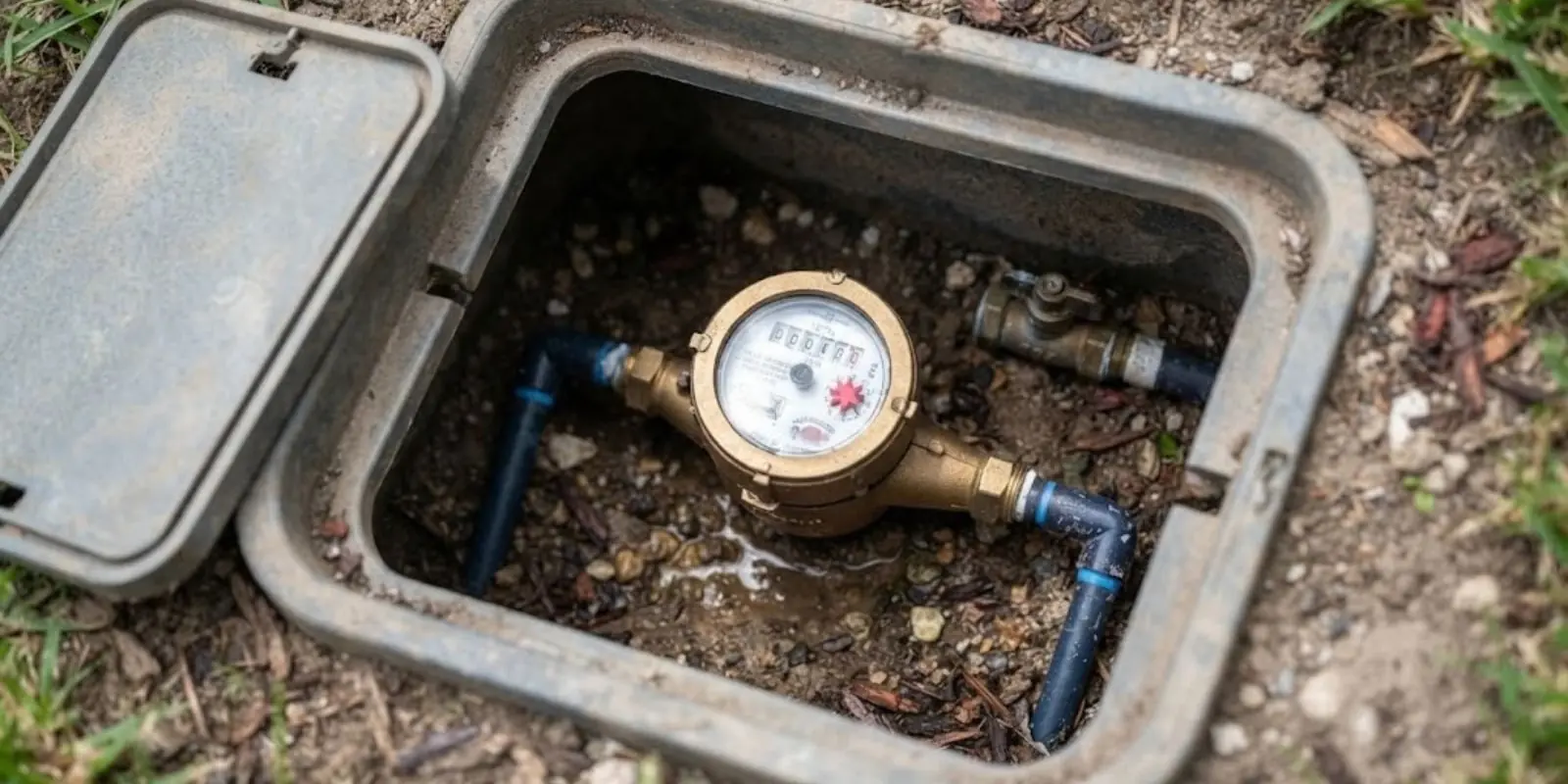
Start with the meter test
Turn off every faucet and appliance that uses water, including the ice maker and the irrigation timer. Find the water meter, which is usually in a box near the street, and open the lid carefully.
Look at the leak indicator, which is often a small triangle or dial. If it moves, or if the numbers advance after fifteen minutes with everything off, water is escaping somewhere after the meter.
Code and standards
According to the EPA WaterSense program, household leaks can waste nearly 10,000 gallons of water a year, so a quick meter check is worth the time.
Check the common spots
Toilets
Add dye to the tank and look for color in the bowl without flushing.
Under sinks and appliances
Feel supply lines and valves for dampness and check the dishwasher and washer hoses.
Water heater area
Look for moisture at the base, the relief valve pipe and the connections.
Outdoor spigots and sprinklers
Wet patches or low sprinkler pressure can point to a buried leak.
Which provider reads your meter?
Local water providers
Rosemead is served by several water providers, including Golden State Water, San Gabriel Valley Water, California American Water, Amarillo Mutual Water and San Gabriel County Water District, according to the City of Rosemead. The meter and the line up to it belong to your provider, so call them first if the leak is before the meter.
Signs inside the walls and floors
Stains on ceilings, bubbling or peeling paint, warped baseboards and a musty smell often mean water is moving through framing. Warm spots on a floor can indicate a leaking hot line under a slab.
Do not ignore these signs. Hidden water feeds mold and weakens materials, and the repair grows the longer the leak runs.
Read your bill
| What you see | Possible cause | Next step |
|---|---|---|
| Usage jumps with no change in habits | Leak or running toilet | Run the meter test. |
| Meter moves with everything off | Leak after the meter | Call for leak detection. |
| Meter still, bill high | Seasonal use or rate change | Ask your provider. |
| Low pressure plus wet yard | Service line leak | See water line repair. |
What to do when you confirm a leak
Shut off the main valve if water is visible or spreading, and call a plumber. Take photos and notes, since insurers often want a record of when you noticed the problem and what you did.
If you suspect the leak is under the slab, see slab leak repair. We work across Rosemead and in Temple City and Montebello and book same-day appointments when available.
A leak check you can finish in an afternoon
Start in the morning when no one is using water. Read the meter and note the number. Check every toilet with dye, look under each sink and look at the water heater and the washing machine hoses.
After a couple of hours of no water use, read the meter again. A change means a leak. If the number did not change, but your bill is high, the explanation is probably use, such as irrigation or guests, and not a hidden leak.
Write down your findings, including the meter numbers and the times. If you call a plumber or your provider, the notes save time.
Prevention
Check under sinks every few months, replace braided supply lines that are old or stained and know where your main shutoff is. A water leak alarm near the water heater is an inexpensive early warning.
Quick leak checklist
- Turn off all water use and read the meter twice.
- Dye test every toilet.
- Check under sinks and behind appliances.
- Look for stains, warm floor spots and damp yard patches.
- Call a plumber with your notes if the meter moves.
A written record of what you checked helps a plumber narrow the search quickly.
Leaks outside the house
Not every leak is inside. Irrigation lines, hose bibs and the line from the meter to the house can all leak underground. Look for green patches, soft soil, pooling water on dry days or a hissing sound near the meter.
If the meter moves with the house shut off, close the main valve at the house and watch the meter again. If it stops, the leak is inside. If it keeps moving, the leak is between the meter and the house valve.
Dye and paper towel tricks
A paper towel wrapped around a supply line or a valve shows slow seeps that you cannot see. Leave it overnight. A damp spot or a stain tells you where to look.
For a toilet that leaks into the bowl, color in the bowl is clear proof. For a toilet that leaks outside the bowl, check the base for dampness and rock the toilet gently to see if it moves.
Questions people ask
It depends on the leak, but even a small steady leak can add many gallons a day and raise your bill noticeably.
Some providers help with high usage questions. Ask yours what they offer.
Yes. Service lines to the house often run under concrete, and a drop in pressure or a damp edge can be the clue.
We use listening and thermal tools to narrow the spot first, and then open only what is needed.
It is a good first check, though slow leaks can take longer to show. Repeat the test with a longer wait.
Still unsure? Call (626) 898-6169 and a dispatcher will talk it through with you.
Want a plumber to look at it?
Call (626) 898-6169 any hour. We book same-day appointments when available, with a clear price before work starts.
Call (626) 898-6169