
How to Clean a Main Sewer Line at Home in Rosemead, CA
A blocked main sewer line backs up every drain in the house. Here is how to confirm it, what is safe to try yourself and when to bring in a plumber.
Signs the main line is blocked
Several symptoms together point to the main line and not a single fixture. A toilet gurgles when you run the washing machine, the lowest drain in the house backs up first and more than one fixture drains slowly at once.
Water rising in a tub or shower when you flush a toilet is a strong sign. Treat it as urgent, because wastewater will spill into the house if you keep using water.
Code and standards
The California Plumbing Code, which is based on the Uniform Plumbing Code (UPC), calls for cleanouts on a building sewer, which is why most homes have one you can find outside.
Find your cleanout
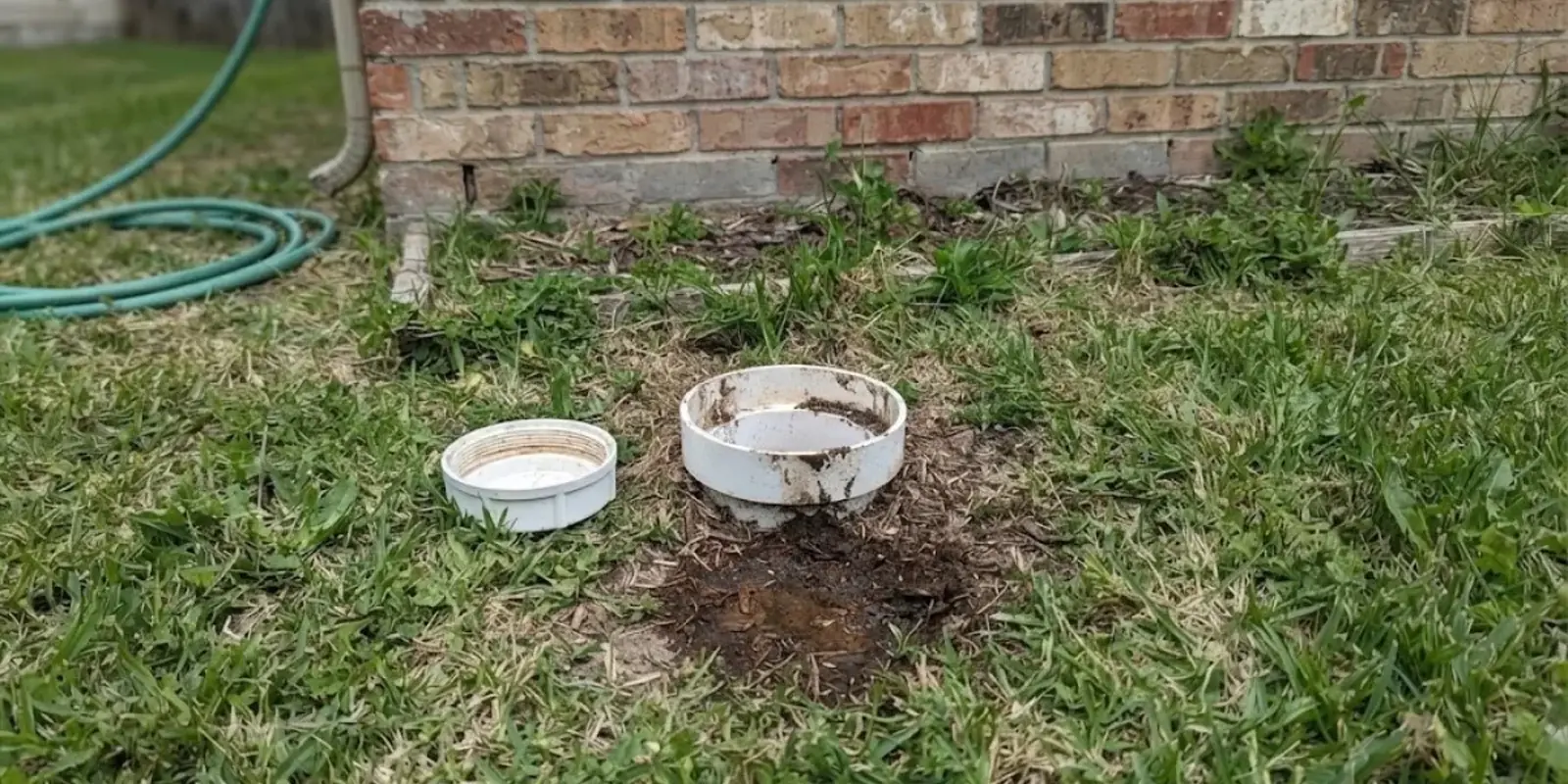
The cleanout is a capped pipe that gives access to the sewer line. It is usually outside near the house, at the property line or in a basement or garage. Look for a round cap, often three or four inches wide.
Open it slowly. If water or waste is standing in the pipe, the blockage is downstream and you should stop and call a plumber. Opening a full cleanout can release a surge of wastewater.
Who maintains what in Rosemead
Public sewer versus your line
Los Angeles County Public Works maintains Rosemead's public sewers, and urgent reports such as a backup, overflow or odor go to 800-675-4357. The pipe from your house to the public main is generally the owner's responsibility, so a camera look helps decide which side a blockage sits on.
What homeowners can safely try
Stop water use
No laundry, dishes or flushing while you work.
Use gloves and eye protection
Wastewater carries bacteria, so protect skin and eyes.
Try a hand auger only if the cleanout is clear
A small auger may reach a shallow blockage near the access point.
Do not use chemical cleaners
They rarely reach the clog and can burn skin or damage older pipe.
When to bring in a plumber
| Situation | Better approach | Why |
|---|---|---|
| Standing water in the cleanout | Call a plumber | A blockage sits downstream. |
| Repeat clogs | Camera plus cleaning | The cause may be roots or a sag. |
| Heavy grease or scale | Hydro jetting | Cleans the pipe wall, see hydro jetting. |
| Backup into the house | Emergency clearing | See sewer line cleaning. |
Cables, jetting and cameras
Plumbers use a power cable machine with cutting heads for roots and soft blockages, and a hydro jetter for grease and scale. A camera shows what is inside the line so the right tool is chosen.
If a line clogs again within months, a sewer camera inspection shows whether a crack, sag or root mass is the cause. Cleaning alone will not fix those.
Understanding what happened to the line
A main line that clogs once and clears is usually a one time event. A line that clogs again and again is telling you something is wrong with the pipe itself. Common causes are tree roots, a bellied section that holds water, a broken joint or scale from age.
Each calls for a different fix. Roots can be cut, but the entry point must be repaired. A belly needs replacement of that section. Scale may respond to hydro jetting, but a broken joint does not.
The camera footage helps you decide, and it gives you a record for any contractor who follows.
Quick reference
- Several fixtures slow or backing up together point to the main line.
- Standing water in the cleanout means stop and call.
- Chemical cleaners rarely help and add risk.
- A camera shows why a line keeps clogging.
Act quickly if waste is rising in a tub or floor drain, since every flush adds more to the problem.
Safety and hygiene
Sewage carries bacteria and parasites. Wear gloves, boots and eye protection if you work near a cleanout, and wash up afterward with soap. Keep children and pets away from spilled wastewater.
Clean and disinfect hard floors that were wet by a backup, and discard porous materials such as carpet padding that soaked up wastewater. Call a water damage professional if the area is large.
Planning for a repeat problem
If you have had two or more main line clogs in a few years, stop treating each one as a surprise. Schedule a camera inspection so you know what the line looks like, and ask for a recommendation in writing.
Roots in clay pipe, a sag that holds water and a broken joint each have different repairs. Knowing which one you have lets you budget and avoid paying again and again for emergency clearing.
Keep your cleanout accessible. Do not bury it under landscaping or pavers, because a clear access point saves time during an emergency and keeps the visit shorter.
Keeping the line clear
Flush only toilet paper and human waste. Wipes labeled flushable still clog lines. Put grease in a can and into the trash, and think carefully before planting large trees near the line.
We handle main line calls in Rosemead and in El Monte, and we can tell you on the phone whether the symptoms point to the main.
We also clear main lines in Montebello and Monterey Park.
Questions people ask
No. A hose does not have the pressure or the control to clear a blockage and can push waste back toward the house.
If neighbors have backups too, the public line may be blocked. Call the sewer authority for the street.
Some policies cover it only with a sewer backup endorsement. Check yours.
Only if there is a reason, such as repeat clogs. A camera check every few years can catch roots early.
Roots are common in older clay or cast iron lines, but grease and wipes cause many blockages too.
Still unsure? Call (626) 898-6169 and a dispatcher will talk it through with you.
Want a plumber to look at it?
Call (626) 898-6169 any hour. We book same-day appointments when available, with a clear price before work starts.
Call (626) 898-6169