
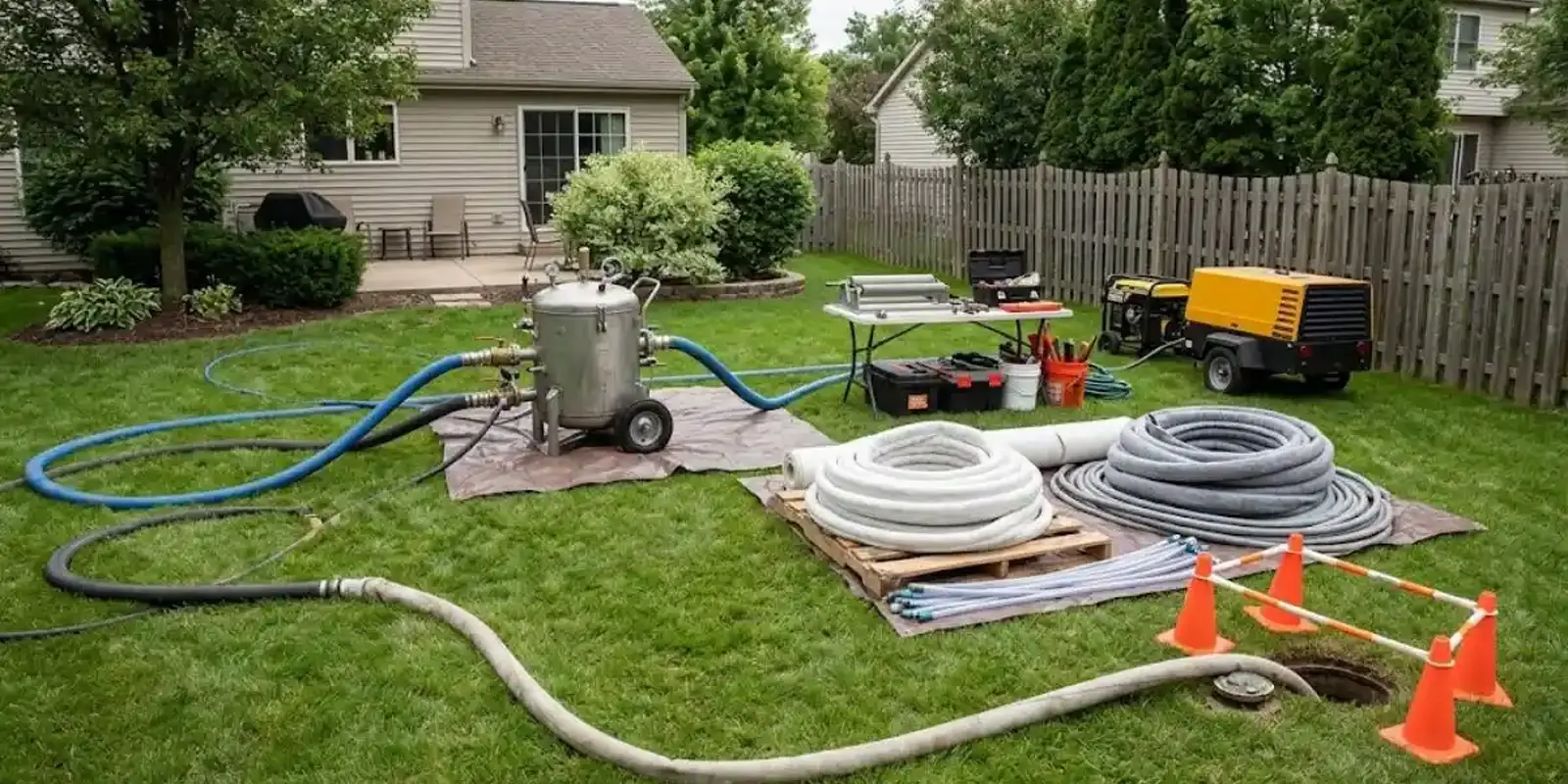
What lining is
Pipe lining places a new surface inside an existing pipe. For sewer lines, the most common method is a cured in place liner, a resin soaked tube that is pulled or inverted into the pipe and hardened, forming a pipe within a pipe.
Cement mortar lining is a different process. It is mainly used on large water mains and some older supply lines, where a thin layer of cement coats the inside and reduces corrosion.
Code and standards
Many agencies describe sewer pipe defects using the NASSCO PACP coding system, an industry standard. Ask a contractor how they record findings before and after lining.
Where lining fits
| Condition | Lining? | Reason |
|---|---|---|
| Small cracks and open joints | Often yes | Liner seals them. |
| Light root intrusion | After cutting roots | Roots must be cleared first. |
| Collapsed or badly offset pipe | No | Needs excavation. |
| Large sags | Usually no | Liner follows the existing shape. |
Rosemead soil and older pipes
Why condition matters
Older clay and cast iron lines can have joints that have shifted over decades. The camera shows how far apart joints are and whether pipe has broken, which is the key to deciding on lining.
Older homes in Rosemead
With 51.6 percent of Rosemead homes built before 1960, based on the City of Rosemead Housing Element, many properties have original clay or cast iron lines. Lining can extend the life of a sound but worn line without trenching through the yard.
The first step is always a sewer camera inspection, because lining only works if the pipe is basically intact.
How lining compares with replacement
Less digging
Lining usually needs small access pits and leaves landscaping and paving in place.
Slightly smaller pipe
The liner reduces the inside diameter a little, though flow is often just as good.
Replacement lasts as a new pipe
It removes every defect and is the clear choice for collapsed lines.
Warranty and permits
Both options may need permits, so ask first.
Our sewer line repair team compares both options after the camera look.
How the lining process goes
The crew starts with a cleaning pass to remove roots, scale and debris, because the liner needs a clean surface to bond to. Then a camera run confirms the pipe is ready and measures its length and diameter.
A resin soaked felt tube is then pulled or inverted into the pipe and inflated against the walls. Heat, steam or ultraviolet light cures the resin, and it hardens into a new inner pipe. A final camera run checks the result and the crew cuts open any branch connections.
The whole process can often be done in a day, though complex lines take longer. You will not have use of the drains while the liner cures, so plan around it.
Questions to ask a contractor
Ask what lining material and thickness they use, how they prepare the pipe, whether they cut roots first and how they reopen branch connections. Ask for the camera footage before and after.
If you are in Monterey Park or El Monte, we can inspect and explain your options.
Downsides and honest limits
Lining does not straighten a pipe. A sag that holds water will still hold water after lining, and a joint offset that is too large may stop the tube from seating correctly.
The liner slightly reduces the inside diameter. In most residential lines this does not matter, because the smooth surface flows better than rough old pipe, but ask about it if your line is already small.
Some lateral connections and fittings are difficult to line. A contractor should tell you where the lining starts and stops and what happens at each end.
Quick reference
- Lining suits sound pipe with small cracks, open joints or light buildup.
- Replacement suits collapsed, badly offset or heavily broken pipe.
- A camera inspection comes first in either case.
- Get the scope, warranty and restoration terms in writing.
Do not let anyone line a pipe that has not been cleaned and inspected. The liner will only be as good as the surface it bonds to.
Permits and the property record
Both lining and replacement may require a permit, especially if the work touches the public right of way or the connection to the main. Ask the City of Rosemead which approvals apply, and who is responsible for pulling them.
Keep the before and after footage with your home records. A documented, inspected repair is useful when you refinance or sell, and it shows the condition of the line at the date of the work.
Deciding with the footage in hand
Ask for the camera footage and a written scope for both lining and replacement. Compare the total cost, including yard and paving restoration, and consider how long you plan to stay in the home.
If the pipe is collapsed or badly offset, replacement is not optional. If the pipe is sound but old, lining can be a sensible way to buy years of service without digging up the property.
Questions people ask
Epoxy and cement methods exist for some supply lines, but repiping is more common in homes.
Makers claim decades of life. Ask for the product warranty and installation details.
No. It follows the existing shape, so low spots remain.
No. The liner is cut to reopen connections and cleanouts.
Often, especially when digging would be costly. Compare written scopes.
Still unsure? Call (626) 898-6169 and a dispatcher will talk it through with you.
Want a plumber to look at it?
Call (626) 898-6169 any hour. We book same-day appointments when available, with a clear price before work starts.
Call (626) 898-6169