
Water Heater Pressure Relief Valve: How to Test It in Rosemead, CA
That small valve on the side of your tank is the last line of defense against a pressure or heat problem. Here is what it does, how to test it and what a drip means.
What the T&P valve does
The temperature and pressure relief valve, often called the T&P or PRV, opens automatically if the tank gets too hot or the pressure climbs too high. It releases water through a discharge pipe so the tank does not rupture.
Every storage water heater is required to have one. It is a safety device, and it should never be capped, plugged or removed.
Code and standards
The California Plumbing Code, which is based on the Uniform Plumbing Code (UPC), requires a relief valve and a discharge pipe on every storage water heater, and the pipe must run to a safe point.
How to test it safely
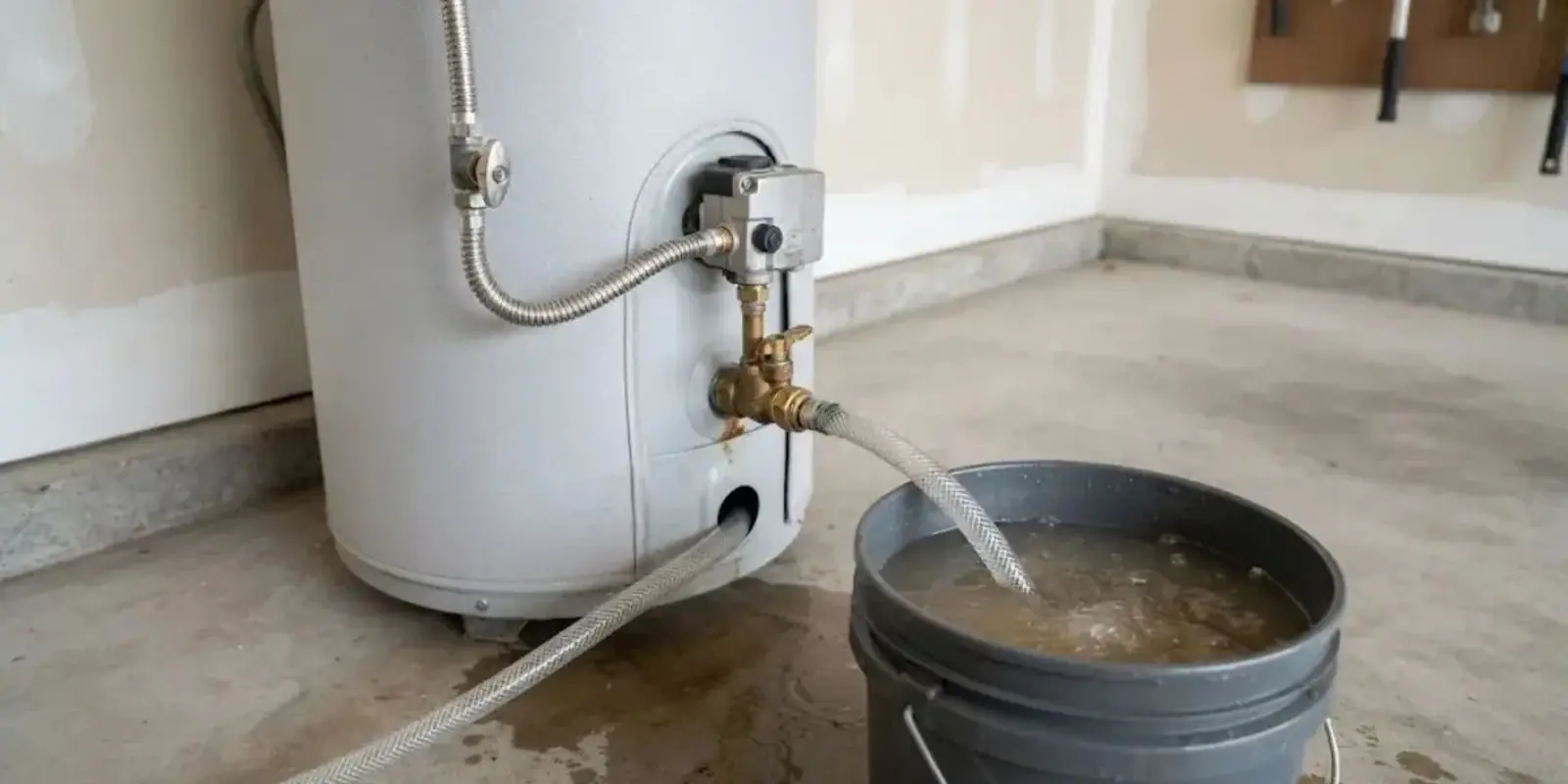
Testing once a year helps confirm the valve still moves. Place a bucket under the end of the discharge pipe and lift the test lever for a few seconds. Hot water will flow, so keep skin and face clear.
Position a bucket
Place it under the end of the discharge pipe to catch the water.
Lift the lever briefly
Raise it for about three seconds and let it snap back.
Check the flow stops
If water keeps dripping after you release it, the seat may be damaged.
Look at the pipe
Make sure the discharge pipe is not corroded, blocked or capped.
Pressure and your water provider
Pressure varies by address
Water pressure depends on your provider and where you are in the system. In hilly parts of Monterey Park, for example, pressure can run higher at the bottom of a slope. If your relief valve drips and your pressure seems high, ask a plumber to measure it at a hose bib.
Why a valve drips
| Cause | What it means | Fix |
|---|---|---|
| Worn valve seat | The valve no longer seals | Replace the valve. |
| High water pressure | Pressure from the supply is too high | Check the pressure and install a regulator. |
| Thermal expansion | Heated water has nowhere to go | Add an expansion tank. |
| Overheating | Thermostat or element fault | Have the heater inspected at once. |
A constant drip is a warning sign. If the tank is also hot to the touch, or you hear rumbling, turn off power or gas and call us.
Replacing the valve
Replacement is a plumber job in most cases. The tank must be drained below the valve, the discharge pipe has to be correct and the new valve must be rated for the tank. Using the wrong rating is dangerous.
If the valve is old and the heater is near the end of its life, it may make more sense to replace the unit. See water heater repair and water heater replacement.
Thermal expansion and why it matters
Water expands when it heats. In a plumbing system with a closed check valve or backflow device, the extra volume has nowhere to go, so pressure climbs each time the heater runs. The relief valve may then open and dribble a little with each heating cycle.
An expansion tank is the usual fix. It is a small tank with an air cushion that absorbs the extra volume. If your valve drips mainly after hot water use, ask whether your system needs one.
Checking the air pressure in the expansion tank is a quick test. If it is waterlogged, replace it before replacing the valve.
Seismic strapping is a separate safety item
The relief valve handles pressure and heat, and strapping handles earthquakes. California requires heaters to be braced, and both items are worth checking at the same time.
Quick safety list
- Never cap, plug or remove the relief valve.
- Keep the discharge pipe pointed down to a safe place.
- Test the lever once a year with a bucket in place.
- Call for service if it drips steadily or the tank runs very hot.
A relief valve that works is cheap protection. One that has been tampered with can turn a minor fault into a dangerous failure.
Age and replacement of the valve
Relief valves wear out. Mineral deposits can stick the seat, and a valve that has never been tested may not open when it needs to. Many plumbers replace the valve whenever the heater is serviced or replaced.
If your valve is more than ten years old and has never been tested, ask a plumber to look at it. It is a low cost part that protects a high cost appliance and the people in the house.
Warning signs: what to do when the valve acts up
A valve that blasts steam or very hot water, a tank that rumbles loudly, or a heater that never shuts off are signs of overheating. Turn off the power or gas and keep people away until a plumber checks the thermostat and the valve.
Do not plug the discharge pipe or hang anything on it. The valve must be free to open, and the pipe must point down to a safe place.
We service relief valves in El Monte and Montebello, and our water heater installation work always includes a correct discharge pipe.
Questions people ask
It should run downward to a safe termination near the floor or outdoors, without any valve, cap or upward bend.
A drip is not normal. It usually means the valve is worn, or the pressure or temperature is too high.
Some handy owners do, but the tank must be drained and the discharge piping correct. We recommend a plumber.
Keep clear, shut off power or gas and call us. Do not cap the pipe.
Once a year is a common recommendation.
Still unsure? Call (626) 898-6169 and a dispatcher will talk it through with you.
Want a plumber to look at it?
Call (626) 898-6169 any hour. We book same-day appointments when available, with a clear price before work starts.
Call (626) 898-6169