
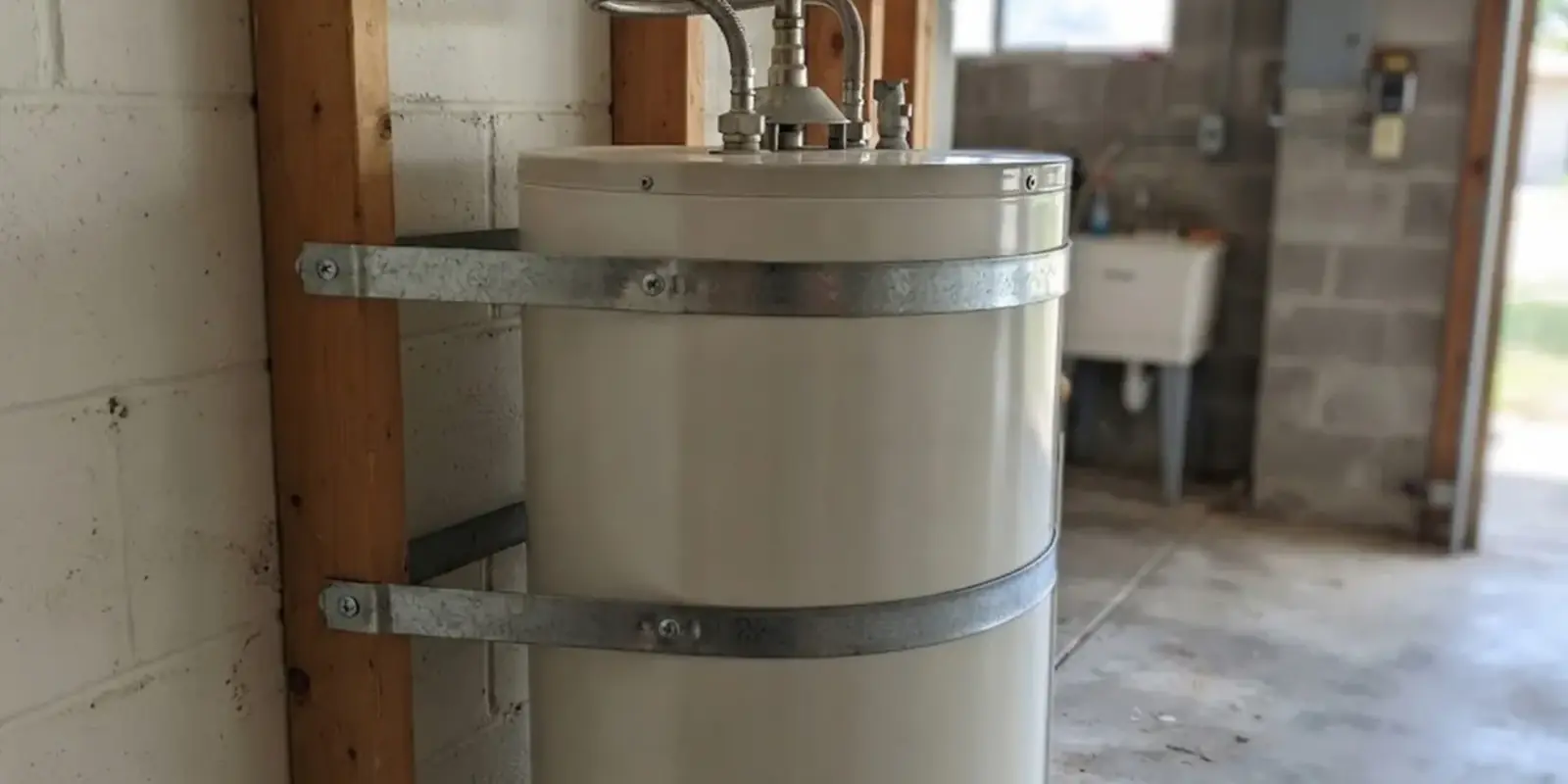
Water Heater Strapping in California: What Rosemead Owners Should Know
Southern California earthquakes can topple an unsecured water heater, break gas and water lines and start fires. Strapping is a simple fix, and it is required.
What the law says
California Health and Safety Code section 19211 requires water heaters to be braced, anchored or strapped to resist falling or horizontal movement caused by earthquake motion. The rule applies to new installations and replacements.
Sellers are also asked about bracing in standard home sale paperwork, so an unstrapped heater can come up in a sale.
Code and standards
According to California Health and Safety Code section 19211, water heaters must be braced, anchored or strapped against earthquake motion.
How strapping works
Metal straps wrap around the tank and attach to wall studs or masonry with lag screws or anchors. Common guidance calls for at least two straps, one in the upper third of the tank and one in the lower third, with the lower strap above the controls.
Check your local building department for the exact rules that apply to your address, and ask a plumber to confirm yours meets them.
Earthquake country
Why Rosemead owners should care
The San Gabriel Valley sits in earthquake country, and the 1987 Whittier Narrows quake shook communities across the area. A heater that is secured and has flexible connectors is far more likely to stay in place and keep gas and water lines intact.
What can go wrong in a quake
Gas line rupture
A moving heater can break the gas connector and cause a leak.
Water line break
Pipes can tear loose and flood the area.
Tank tipping
A falling heater can injure people and damage property.
Fire risk
A gas leak near the pilot or burner is dangerous.
Check your heater yourself
Look for straps
There should be at least two metal straps around the tank.
Check the anchors
Screws should enter solid framing and not just drywall.
Check the connections
Flexible gas and water connectors give some movement in a quake.
Look for leaks and rust
A heater with a rusty base should be replaced, see water heater replacement.
If you are not sure, a plumber can add or fix straps during a quick visit.
Installing straps yourself, step by step
Start by finding the studs behind the heater with a stud finder. Mark the locations at the heights where the straps will go, one in the upper third of the tank and one in the lower third, keeping the lower strap above the controls.
Wrap the metal strap around the tank and attach each end to the stud with a lag screw long enough to bite deep into the wood. Pull the strap snug and check that the tank cannot rock.
Do not strap a heater that is rusted through at the base or leaking. Replace it first, since the tank may fail even when it is held in place.
Strapping and other safety steps
A seismic gas shutoff valve can stop gas flow during strong shaking. A relief valve with a proper discharge pipe is also required, and a worn or tampered relief valve is a common reason for a dripping discharge pipe.
We strap tanks during every installation, see water heater installation, and we can check existing heaters in Rosemead and Monterey Park.
Masonry walls and tight spaces
If the heater sits against a block or concrete wall, the straps need masonry anchors rated for the load. Drilling the wrong spot can crack the block, so use the manufacturer guidance and the right bit.
A heater in a closet may not leave room to wrap a strap. In that case, a plumber may use a bracing kit designed for tight spaces. If the space is too small, relocating the heater may be the better answer.
Quick compliance check
- At least two straps, upper third and lower third of the tank.
- Straps fixed to wall studs or properly anchored masonry.
- Lower strap above the controls.
- Flexible gas and water connectors in place.
- No rust at the base of the tank.
If any item fails, a plumber can usually fix it in a short visit, and it makes sense to do it before a sale or inspection.
Selling or buying a home
When a home changes hands, the paperwork asks about water heater bracing, and a buyer inspector may look at it. A heater that is properly strapped removes one item from the list.
If you are buying, check the heater straps during your walkthrough. If you are selling, fixing the straps ahead of time costs little and avoids a negotiation over a small item.
Other earthquake precautions for the home
Know where your gas shutoff is and keep a wrench near it. After a strong quake, if you smell gas or hear hissing, shut the gas off at the meter and leave. Only the gas utility should turn it back on.
Check flexible connectors on the water heater and the stove. Rigid pipe can snap when a heavy appliance moves, and a flexible connector gives the appliance room to shift without breaking the line.
We also check straps in El Monte and Temple City homes.
Questions people ask
They are mounted to the wall, which provides support. Follow the manufacturer and local code.
Many owners do, using a kit. Make sure the anchors reach solid framing and the straps sit at the right height.
No, but it greatly reduces the risk of tipping and line breaks.
A kit is inexpensive, and a plumber can install it during a visit. We give a clear price before work starts.
Typically not for straps alone, but replacement of the heater generally needs a permit.
Still unsure? Call (626) 898-6169 and a dispatcher will talk it through with you.
Want a plumber to look at it?
Call (626) 898-6169 any hour. We book same-day appointments when available, with a clear price before work starts.
Call (626) 898-6169